Dog Fetch Toys for Chasing, Returning and Doing It Again
Fetch toys turn a ball, ring or flying shape into a shared game with a very simple business model: you throw it, your dog retrieves it and everyone pretends the next throw will be the last.
Choose by size, material, bounce, visibility and where you plan to play. A good fetch toy should be easy for your dog to pick up, comfortable to carry and suitable for the surface around you.
Choose the Right Type of Fetch Toy
Dog Balls
Balls are familiar, easy to roll and useful for teaching the game at short distance. Match the diameter to your dog so it cannot be swallowed or become stuck behind the jaw.
Rings and Frisbee-Style Toys
Rings and flying discs can be easier to spot and grip than a small ball. Flexible designs may suit dogs who prefer a broader carrying surface. Begin with low, controlled throws before attempting dramatic park cinematography.
Irregular-Bounce Toys
Faceted balls and shaped rubber toys change direction when they land. That adds unpredictability, but use them in an open area where sudden turns are safe.
Soft Indoor Fetch Toys
Felt, fabric and plush toys can work for gentle rolling and short indoor retrieves. Check whether the individual toy is intended for tossing, tugging, chewing or supervised soft play.
Floating Fetch Toys
Only use a toy in water when its product information confirms that it floats. Start in shallow, calm water, keep the session short and never throw beyond your dog’s safe swimming ability.
How to Teach a Dog to Fetch
Begin in a quiet space with a toy your dog already likes.
Roll or toss it a short distance.
Encourage your dog to turn back towards you.
Trade the toy for a treat or a second toy instead of chasing your dog.
Repeat a few times and stop while the game is still fun.
If your dog prefers running away with the prize, congratulations on identifying the current version of the game. Practise the return separately and keep distances short.
Fetch Toys for Puppies and Growing Dogs
Use lightweight toys, short rolls and low throws. Repetitive jumping, sharp turns and hard landings can put unnecessary load on a growing body. Keep sessions brief and ask a vet about suitable activity if your puppy has a joint or mobility concern.
Playing Fetch Safely
Choose a toy too large to swallow whole.
Inspect it before and after every game.
Stop using it when pieces loosen, seams split or the surface becomes sharply damaged.
Throw away from roads, crowds, fragile objects and slippery surfaces.
Avoid forcing repeated jumps or sudden turns.
Bring water and schedule rest during active play.
No dog toy is indestructible. Browse the Strong Chewers collection for more robust options, but every toy still requires inspection and supervision.
Fetch on Land and in Water
For grass, choose a visible colour and a shape that is easy to find. For indoor play, use soft, controlled rolls. For water, confirm buoyancy, rinse the toy after use and let it dry completely.
Dogs who are inexperienced swimmers may need a properly fitted canine life jacket and close support. Fetch is optional. Returning from the pond is not.
Fetch, Tug or Both?
Some rings and longer toys work for both retrieving and a controlled game of tug. If your dog loves bringing the toy back but dislikes giving it up, a brief tug can become the reward for returning.
Follow the material-specific instructions. Rubber, felt, canvas, plush and electronic light-up balls do not share a universal washing programme. Remove batteries or electronic toys from play if the casing is damaged.
Let wet toys dry before storage and keep dedicated outdoor toys away from unsupervised chewing.
Frequently Asked Questions
What is the best fetch toy for a dog?
The best option is easy to see, safe to carry and correctly sized for your dog. Material and shape should suit the play area and chewing style.
How big should a dog ball be?
It must be too large to swallow or lodge behind the jaw while still being comfortable to carry. Follow the product’s size guidance.
Are frisbees safe for dogs?
Purpose-made dog flying toys can be suitable when correctly sized and used with low, controlled throws. Avoid repeated high jumps and hard landings.
Can puppies play fetch?
Yes, with short sessions, lightweight toys and low-impact rolls or throws. Browse The Puppy Edit for puppy-focused options, and avoid repetitive jumping and forced exercise.
Can any dog toy be used in water?
No. Use water only when the product information confirms buoyancy and suitability. Supervise closely and consider your dog’s swimming ability.
Why does my dog chase but not return the toy?
The chase may be more rewarding than the return. Practise at short range and trade for a treat, another toy or a brief tug game.
Are fetch toys chew toys?
Not automatically. Many are made for interactive play rather than prolonged unsupervised chewing. Follow the individual product guidance.
When should I replace a fetch toy?
Replace it when pieces loosen, seams open, electronics become exposed or damage creates a swallowing or injury risk.



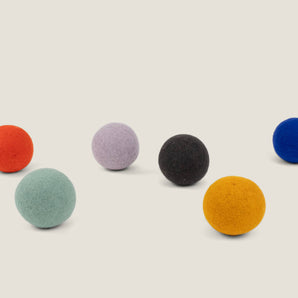 Felt Balls - Set of 2 €15,95 /Risa & Kuno (Yellow & Brown)Fine & Isa (Mint & Blue)Mats & Marla (Orange & Lilac)Available in 3 colors