Harnesses

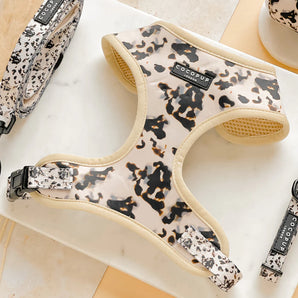

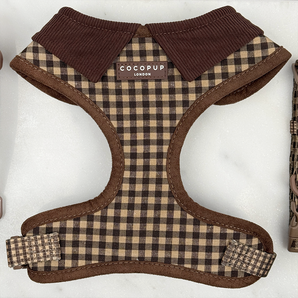

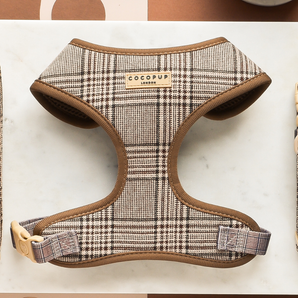

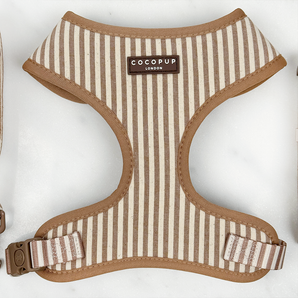

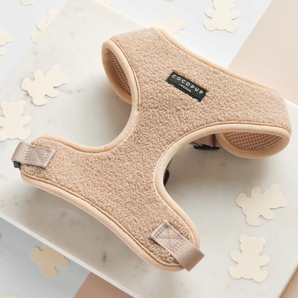

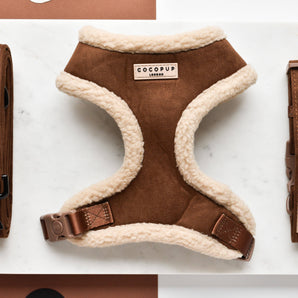
Adjustable dog harnesses for everyday walks
A good dog harness should fit securely, give you a clear lead-attachment point and survive the ordinary business of going outside. Looking considered rather than aggressively practical is a welcome bonus.
Our current harnesses adjust at both the neck and chest. They slide over the head, fasten at the side and include a D-ring for attaching the lead. The range runs from XS to L, but the letters are only a starting point. Measure your dog before choosing.
How to measure your dog for a harness
Use a soft tape measure and take two measurements while your dog is standing naturally:
- Neck: measure around the lower part of the neck where the harness will sit.
- Chest: measure around the widest part of the ribcage, usually just behind the front legs.
The current Cocopup London adjustable-neck harnesses use these product ranges:
- XS: neck 29–36 cm, chest 35–48 cm
- S: neck 35–43 cm, chest 41–54 cm
- M: neck 39–50 cm, chest 46–60 cm
- L: neck 42–55 cm, chest 57–80 cm
Both measurements need to sit inside the chosen size range. If they point to different sizes, do not guess from breed or weight alone. Check the individual product guide and choose a different shape if the neck and chest cannot both be fitted correctly.
Check the fit before the first walk
Adjust the straps so the harness sits securely without restricting breathing or shoulder movement. It should not rub directly behind the front legs, twist under light lead pressure or leave enough space for your dog to back out.
Let your dog wear it briefly indoors first. Watch them walk, sit and turn, then check the fit again. Coats change, puppies grow and straps can move, so a harness that fitted last month still deserves another look.
Choose the fabric and finish
The collection includes soft neoprene, polyester, linen-look stripes, plaid, faux suede and textured teddy finishes. Material and care instructions differ by design, so use the individual product page rather than assuming every harness can be washed or dried in the same way.
Most current designs also have matching pieces available. Browse dog collars or the wider walking collection if you enjoy the quiet satisfaction of a coordinated set.
Harness safety and care
Inspect the straps, stitching, buckle and D-ring before use. Replace the harness if anything is loose, cracked, heavily worn or damaged. Remove it when your dog is unsupervised, during rough play and whenever it could snag.
A harness does not automatically teach loose-lead walking or stop pulling. Training and handling still matter. Choose equipment that fits your dog and ask a qualified trainer or veterinary professional for help when movement, pain, breathing or escape behaviour makes fitting difficult.
Frequently asked questions
Are these step-in harnesses?
No. The current adjustable-neck styles slide over the head, adjust at the neck and chest, then fasten at the side.
What size harness does my dog need?
Measure both the lower neck and widest part of the chest, then compare both numbers with the product guide. Breed and weight are not reliable enough on their own.
Can a puppy wear an adjustable harness?
Yes, if the current measurements fit the product range and the harness sits correctly. Recheck the fit often because puppies grow quickly.
Will a harness stop my dog pulling?
Not by itself. A harness is walking equipment, not an automatic training method. Pair appropriate equipment with consistent loose-lead practice.
Can I wash the harness?
Care instructions vary by material. Follow the instructions on the chosen product page and remove detachable accessories before cleaning when directed.
Should my dog wear a harness all day?
Use it for supervised walks and activities. Remove it for rest, rough play and unsupervised time to reduce rubbing and snag risks.